Deutsch
 Italiano
 Français
❓ Which predictions are correct …
📚 My reading recommendation today on this topic is the book by Philip Tetlock, an American psychologist and professor at the University of Pennsylvania:

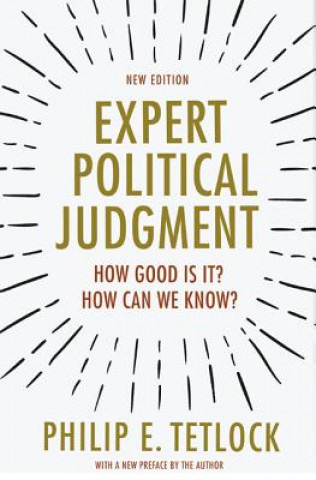
📖 Expert Political Judgment
In it, Tetlock describes in detail the reasons and causes he has investigated as to why the predictions made by recognised experts usually turn out to be wrong.
This phenomenon applies, for example, to the extinction of animal species, the supposed population explosion resulting in several million deaths from starvation, the submergence of the Netherlands below sea level before the 21st century, but also to the numerous current issues in science, economics, politics and society.
📊 For over two decades, Philip Tetlock researched and analysed more than 80,000 predictions made by renowned experts and then compared them with what actually happened.
TETLOCK’S FINDINGS
👉 Many experts come across as self-assured in the media, but they tend to think in inflexible ways.
According to Tetlock’s analyses, they often cling rigidly to their worldviews and, for this reason amongst others, draw completely incorrect conclusions about the future.
👉 Flexible people, on the other hand, who possess diverse perspectives on life, experience and knowledge, are demonstrably far better at forecasting the future.
📖 SOME KEY POINTS FROM TETLOCK’S BOOK
⛔️ Experts with grand, fixed theories frequently fail in their predictions of the future, as they usually ignore counter-evidence and twist facts to suit their views.
⛔️ The influence of self-confidence:
A striking correlation is that the more well-known and vocal an expert was in the media, the more inaccurate their predictions turned out to be in hindsight.
⛔️ Lack of self-criticism:
Experts rarely learn from their incorrect predictions and misjudgements because they find excuses for their errors.
✅ By contrast, people with lots of small ideas are more successful at predicting the future, as they combine their different approaches and correct their mistakes quickly.
🌎 IMPLICATIONS AND TETLOCK’S RECOMMENDATIONS FOR PRACTICE
🌱 Knowledge is not enough 🌱
Expert knowledge alone does not protect against errors of judgement.
🌱 Open-mindedness 🌱
Flexibility and questioning one’s own opinions lead to far better forecasting results.
🌱 Better decisions 🌱
According to Tetlock, institutions should always take diverse perspectives into account in their forecasts for the future, rather than relying on rigid ideologies.
📚 Enjoy the read ☀️☀️☀️☀️
( Philip Tetlock / Expert Political Judgment, How Good Is It? How Can We Know? / Princeton University Press / ISBN 0-691-12302-0 )
_____
_____
💡 Feel free to follow me for inspiration and scientifically grounded strategies.
Best regards 🌱 Frank